Yemeni Experts Warn of US-UAE Expansion on Yemeni Coasts: 'Sana’a Has the Power and Will to End Foreign Illusions'
News - Yemen: Yemeni political and military experts have warned that US and Emirati activities along Yemen’s coasts and strategic islands pose a grave threat to regional security, stressing that Sana’a possesses both the will and capability to counter these moves and defend national sovereignty.
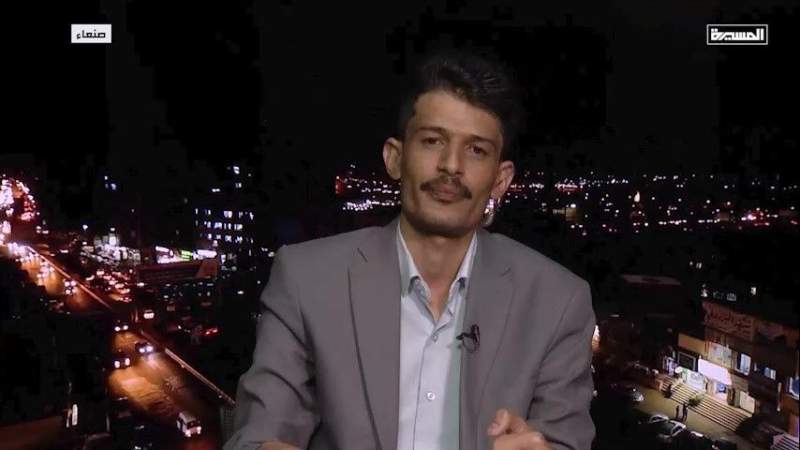
Zakaria Al-Sharabi, Director of the Information Center at the Moral Guidance Department, stated in an interview with Al-Masirah TV that the Emirati military build-ups in Yemen’s coastal areas — including Socotra Island — are part of a broader US-Israeli strategic project to dominate international navigation in the Red Sea and the Arabian Sea, extending influence across the entire Gulf region.
“These are not independent Emirati moves,” Al-Sharabi explained. “They fall squarely within Washington and the Israeli entity’s ‘New Middle East’ plan, designed to empower the Zionist entity to control the region’s geopolitical and economic dimensions.”
He revealed that the UAE has established electronic surveillance, jamming, and espionage platforms on several Yemeni islands, preparing them as potential drone launch sites for future operations. These developments, he said, reflect the modern US doctrine of “leading from behind,” where regional allies are tasked with safeguarding American and Zionist interests.
Al-Sharabi added that the US-supervised naval alliance known as Task Force 153, which includes the UAE and Saudi Arabia, is responsible for maintaining military, security, and economic control over the Red Sea and Bab al-Mandab, while promoting normalization with the Israeli enemy. Despite the 2022 agreement requiring all foreign troops to withdraw from Yemen, he emphasized that Emirati forces continue to expand their presence at an alarming rate.
He warned that this expansion also extends into the Horn of Africa, where espionage and radar systems are being installed to provide the Zionist regime with early-warning capabilities against ballistic missiles and drones. “Such actions,” Al-Sharabi noted, “serve the Zionist project and American ambitions — but Yemen will not allow this occupation to persist.”
He concluded that Yemen has both the determination and capability to confront these threats, affirming that the defense of Yemeni territory and sovereignty is a core pillar of the national liberation strategy.
Meanwhile, military expert Mahfouz Salem described the UAE’s ongoing attempts to seize Yemeni islands as part of an American-Zionist scheme aimed at controlling Yemen’s vast maritime resources and facilitating Zionist influence in the Red Sea.
Speaking to Al-Masirah, Salem said Yemen’s 133 islands, rich in resources and strategic depth, are being exploited under foreign occupation. “The UAE plays a functional role in serving the Zionist entity,” he said, “using mercenaries to establish military outposts while relying on Washington’s coordination.”
He highlighted that the Emirati activities mirror historical efforts to subjugate Yemen’s coasts — struggles that once claimed the lives of national leaders like President Salim Rubai Ali and Ibrahim Al-Hamdi, who resisted foreign interference in the Red Sea.
Salem warned that the next phase will be decisive, asserting that “the battle for liberation is inevitable.” He praised President Mahdi Al-Mashat for maintaining steadfast national positions that have forced the US to recalculate in the face of Yemen’s growing missile and drone power.
“The people of Yemen,” he stressed, “are fully mobilized and awaiting the moment to reclaim every occupied island and coastline. No foreign power or local proxy will prevent the coming battle of liberation.”
Since 2015, Yemen’s coastal and island regions have become a focal point of geopolitical rivalry involving the United States, the Israeli enemy, and the UAE. Under the pretext of combating piracy and ensuring maritime security, the UAE has expanded its control over key Yemeni islands — including Socotra, Mayyun, and Perim — establishing military bases, surveillance systems, and logistical hubs.
Analysts see these moves as part of a broader US-Israeli agenda to dominate trade routes connecting the Red Sea, Bab al-Mandab, and the Arabian Sea, ensuring strategic access to both Africa and the Gulf.
However, Sana’a has consistently rejected foreign military presence, labeling the UAE an occupying force and asserting that the liberation of Yemen’s islands and coastlines remains a central objective of its national defense strategy.
With mounting tensions in the Red Sea and continued Western naval deployments, Yemen’s leadership insists that any violation of its sovereignty will meet a strong and calculated response, signaling that the battle for the coasts — and regional balance — is far from over.
#Yemen #Occupied Southern Governorates 25-10-26-
10:27
Bloomberg: A “Shahed” drone costs about $35,000 compared to nearly $30 million for an MQ-9
10:27
Bloomberg: The Pentagon is racing to develop low-cost technologies increasingly used in modern warfare
10:27
Bloomberg: The Pentagon is racing to develop low-cost technologies increasingly used in modern warfare
10:27
Bloomberg: The new drones can be used for suicide attacks, field reconnaissance, and naval operations
10:27
Bloomberg: US Central Command has announced the creation of the “Scorpion Strike Force” to operate small, lightweight drones produced by an Arizona-based company