Yemeni Writer: Sana’a’s Independence Message Echoes 1967 Against Occupation

News - Yemen: Yemeni writer and journalist Mahfouz Salem Nasser said that the mass discourse emerging from Sana’a on the anniversary of national independence is intentionally invoking the liberation memory of 30 November 1967 to confront the “multiple occupation” currently facing southern Yemen.
Nasser noted that today’s scene resembles the period before independence, arguing that current developments represent “a recycling of the old colonizer.”
He added that Britain and other foreign powers have reappeared in the south through diplomatic presence and official visits, reflecting a direct or indirect return of colonial influence. “It is as though the British colonizer stands today over the graves of Lubouza, Antar, Shae’i and the revolutionaries of the National Front to declare: We have returned,” he said.
He stressed that although the 58th anniversary of independence brings pride, it also exposes a painful contradiction: the south, liberated through heavy sacrifices, now lives under the dominance of multiple external actors — including Saudi Arabia, the UAE, the United States, Britain, and the Israeli enemy.
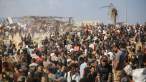
Nasser added that the massive crowds gathered in Sana’a’s Al-Sabeen Square recall the historic solidarity between northern Yemen and the National Front fighters in the south, when Sana’a and other northern provinces supplied arms, men, and training during the armed struggle against British colonial rule.
He pointed out that many camps and streets in the south still bear the names of northern martyrs — such as Martyr Abboud and Martyr Badr — symbolizing the unity of blood and struggle.
He criticized “the rush toward Hadramaut,” saying that external forces are attempting to revive old projects aimed at separating the governorate or partitioning it among regional actors, calling this an extension of historical ambitions that sought to erode Yemen’s sovereignty before independence.
Addressing the “mercenaries and forces aligned with the occupation,” Nasser said it is paradoxical that some groups celebrate independence while under the protection of new occupiers. “How can we celebrate defeating one colonizer while standing under the weapons of new ones?” he asked.
Nasser affirmed that the millions who rallied today across Sana’a and other Yemeni provinces reflect broad popular rejection of partition schemes and fragmentation, representing a natural extension of Sana’a’s historical role during the liberation struggle, when it provided fighters, weapons, and blood to the south — embodying a unified destiny between north and south.
He concluded that the blood of the early revolutionaries who expelled British colonialism continues to run in the veins of Yemenis resisting occupation today, asserting that the Yemeni people will continue their struggle for sovereignty, unity, and full independence.
November 30 marks Yemen’s Independence Day, commemorating the end of British colonial rule in the South in 1967. The anniversary has gained renewed significance amid growing tensions and widespread public dissatisfaction over the continued presence of Saudi and UAE forces in eastern and southern Yemen, where political, military, and economic influence efforts have sparked accusations of a new form of occupation.
#Occupied Southern Governorates about 2 days-
10:27
Bloomberg: A “Shahed” drone costs about $35,000 compared to nearly $30 million for an MQ-9
10:27
Bloomberg: The Pentagon is racing to develop low-cost technologies increasingly used in modern warfare
10:27
Bloomberg: The Pentagon is racing to develop low-cost technologies increasingly used in modern warfare
10:27
Bloomberg: The new drones can be used for suicide attacks, field reconnaissance, and naval operations
10:27
Bloomberg: US Central Command has announced the creation of the “Scorpion Strike Force” to operate small, lightweight drones produced by an Arizona-based company