Yemeni Officials: December Sedition a Foreign-Backed Plot; Ansarullah’s Leadership Foiled It Through Firmness and Forgiveness
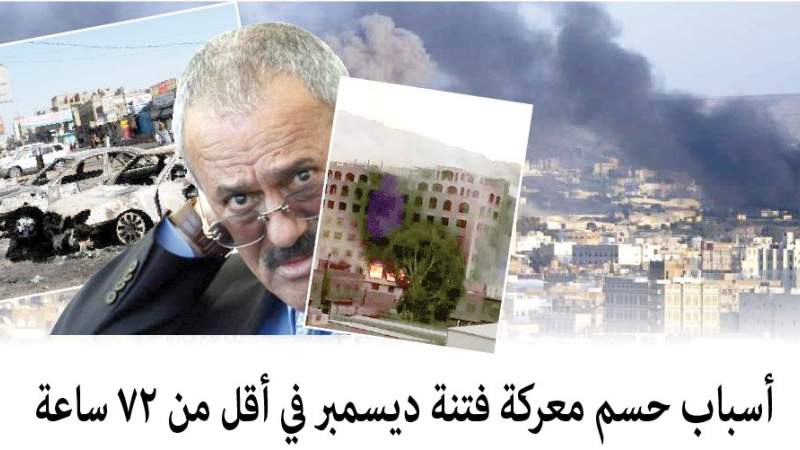
Yemen: Senior Yemeni officials said that the December Sedition was a pre-planned attempt to fracture the home front and divert the country from confronting the US–Saudi–UAE aggression. They emphasized that divine support, national vigilance, and the firm stance of Ansarullah’s leadership prevented the plot from achieving its objectives, instead turning it into a moment of renewed internal cohesion.
Planned Attempt to Drain Resistance Forces
Deputy Minister of Information Mohammad Mansour said in a televised statement that the December Sedition “was designed to drain a portion of Ansarullah’s fighters and ammunition away from the main battlefield against the Saudi-led aggression, paving the way for the coalition to seize control of the country.”
Mansour emphasized that the events “revealed the ethical, humanitarian, and civilizational character of Ansarullah,” particularly the leadership of Sayyed Abdulmalik Badr al-Din al-Houthi, the martyred President Saleh al-Sammad, and President Mahdi al-Mashat. He noted that the Yemeni public “was never part of that chaos, nor aligned with the sedition.”
He added that key national figures—among them Abu Rass, Sheikh Yahya al-Ra‘i, and the martyred al-Rahwi—played an essential role in safeguarding internal unity and confronting the Saudi aggression during the crisis.
Foreign Involvement Highlighted
Mansour said evidence showed coordinated external involvement, particularly by the UAE and Saudi Arabia, who attempted to ignite the sedition in conjunction with the UAE’s national day “to falsely project a political victory for American–Saudi–Emirati factions inside Yemen.”
He added that targeted attacks on specific families and the tearing of martyrs’ posters in areas like Mahwit and Hajjah were part of the broader effort, but Sayyed Abdulmalik’s directives to avoid being drawn into “small projects” averted escalation.
National Gains After Foiling the Plot
He noted that foiling the sedition led to major national gains, including the surrender of thousands of mercenaries and the retaking of several districts and provinces—among them al-Baidha, al-Jawf, and parts of Marib—along with delivering a direct message to Saudi Arabia through the Aramco operations.
Sedition Aimed at Destroying the Internal Front
For his part, Nasr al-Din Amer, Chairman of the Yemen News Agency (SABA), said on the eighth anniversary of the sedition that Yemen had faced “one of the most dangerous attempts targeting its unity since the start of the aggression.”
He added that the failure of the sedition “was nothing but divine victory,” reaffirming Yemen’s capacity to withstand foreign conspiracies.
Amer explained that the internal front had been heavily infiltrated prior to the sedition, with the enemy exploiting psychological and political openings “that could have toppled major states in the region had they faced similar pressure.”
He noted that extensive coordination between sedition leaders and US, Saudi, and Emirati officials confirmed the depth of the conspiracy.
Forgiveness That Averted National Disaster
Amer emphasized that Sayyed Abdulmalik’s general amnesty was “an extension of prophetic behavior” and prevented severe repercussions that could have harmed the Yemeni people.
He said many of those involved in the sedition remain today in areas like Hajjah and Midi under coalition control, and that Yemen “could have slipped into the American–Zionist orbit had the plot succeeded.”
Unity and Steadfastness Remain Yemen’s Shield
Both officials said hostile voices still attempt to stir unrest every December, but Yemen’s “great sacred causes, its steadfast leadership, and the retreat of external influence” continue to neutralize such efforts.
They affirmed that Yemen’s unity, faith-based identity, and national leadership remain the first line of defense against all schemes targeting the country.
The December Sedition refers to the events of December 2017, when an internally driven uprising—led by former president Ali Saleh and supported by the US–Saudi–UAE coalition—sought to fracture the home front in Sana’a and destabilize the capital during the height of the aggression on Yemen.
Ansarullah rapidly contained the revolt within days, preventing its escalation. The leadership, led by Sayyed Abdulmalik Badr al-Din al-Houthi, announced a broad amnesty afterward, which Yemeni political and media figures describe as a pivotal moment that preserved national unity and redirected the focus back to confronting the coalition and its Israeli enemy partner.
#Yemen #US-Saudi Aggression #December Sedition about 11 Hours-
08:56
Palestinian sources: The Israeli enemy army demolishes residential buildings in Khan Yunis city, southern Gaza Strip
08:11
UN Human Rights Office: Gaza Now Home to the Largest Number of Child Amputees in Modern History
07:13
Israeli Media: Two of the regime's soldiers seriously wounded during exchange of fire in Gaza's Rafah City
06:51
Almasirah Correspondent in Sana’a: Crew of “Eternity C” Released via Omani Mediation, Depart on Flight from Sana’a to Muscat
06:50
Palestinian sources: Israeli enemy helicopters are heavily striking northeastern Rafah in southern Gaza