British Report: Yemeni Forces Global Military School in Naval Warfare
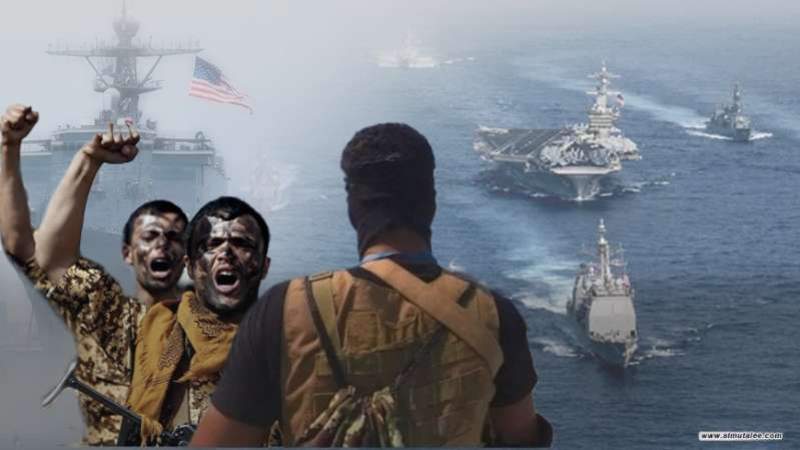
News - Middle East: The British outlet Seatrade Maritime reported that Ukraine has adopted offensive methods similar to those used by Yemen’s Armed Forces during the Promised Conquest and Sacred Jihad operations in support of Gaza in the Red Sea. The report came after Ukrainian security services claimed responsibility for drone attacks on the Russian oil tankers Kairus and Virat, both part of Moscow’s so-called “shadow fleet.”
The British website stated that the Ukrainian attack, carried out on 28 November near the Turkish coast, resulted in powerful explosions that tore through the hulls of both vessels. The incident, it said, reflects the use of naval drones in a manner closely resembling Yemeni tactics employed against Israel-linked shipping in the Red Sea, the Gulf of Aden, and the Bab al-Mandab Strait—an indication of the growing spread of such methods in modern maritime conflict.
According to the analysis, drawing parallels between Ukraine’s tactics and those of Yemeni forces conveys strategic messages that go beyond the event itself. Over the past two years, Yemen’s Armed Forces in Sana’a have become an international model for chokepoint warfare, conducting a string of attacks on vessels connected to the Israeli enemy and its shipping lines while transiting the Red Sea. Their toolkit includes drones, autonomous explosive-laden boats, and long-range anti-ship missiles—described in the report as low-cost, high-impact, and difficult to intercept.
The report added that Ukraine’s increasing reliance on Yemeni-style tactics suggests that the “Sana’a model” is evolving into a wider blueprint for asymmetric naval warfare, especially for states that cannot match the power of major naval forces.
It further noted that the effectiveness of Yemeni operations—and their ability to penetrate advanced defensive systems—has become a growing concern for leading maritime powers.
According to Seatrade Maritime, Kyiv’s adoption of Yemeni tactics in Europe for the first time underscores the likelihood that naval drones have emerged as one of the most significant weapons of the twenty-first century. It also reflects a shift in the Russia–Ukraine war toward targeting “energy arteries” rather than military infrastructure alone, marking the beginning of a new era defined by the erosion of major powers’ control over the seas and the rise of impactful, low-cost combat tools capable of reshaping global energy dynamics.
In recent years, Yemen’s Armed Forces have emerged as a central player in redefining modern naval warfare. Their operations in the Red Sea and Bab al-Mandab—particularly during campaigns supporting Gaza—have showcased an advanced and highly effective asymmetric strategy centered on naval drones, explosive-laden unmanned boats, and long-range anti-ship missiles.
These tactics, characterized by low cost and high impact, have disrupted major shipping routes and challenged the capabilities of technologically superior naval powers. Analysts say Yemen has become a global reference point for “chokepoint warfare,” demonstrating how smaller forces can leverage innovation to influence critical maritime corridors.
This shift has drawn international attention. As conflicts expand into the maritime domain—from the Red Sea to the Black Sea—states lacking large naval fleets are beginning to adopt similar methods. Ukraine’s recent replication of Yemeni-style drone attacks marks the first application of this model in Europe, signaling a broader transformation in maritime conflict dynamics.
-
10:47
The Palestinian Red Crescent: A young man was injured by live fire from Israeli enemy forces near the separation wall in the town of Ar-Ram, north of occupied Al-Quds
10:46
Palestinian sources: Israeli enemy forces raided a home in the town of As-Silah al-Harithiya, west of Jenin, in the occupied West Bank
06:07
Bin Habtoor: There is information confirming the existence of direct coordination between the “Southern Transitional Council” — backed by the UAE, the Israeli enemy entity
06:07
Member of the Supreme Political Council, Abdulaziz bin Habtoor: The events in the southern and eastern provinces fall within the framework of an old–new plan drawn up by the Saudi, Emirati aggression countries
06:07
The Political Bureau of Ansarullah: We renew our pledge to the martyred leaders and affirm that Yemen will remain alongside Palestine and its resistance until the liberation of the occupied land