Yemen: National Media a Strategic Weapon Against US–Zionist Aggression, Officials Say
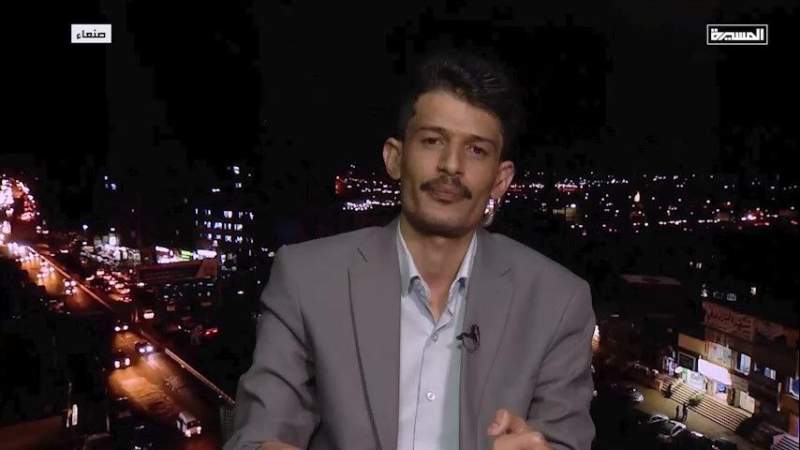
News – Yemen: Senior Yemeni officials affirmed that national media has become a central pillar in confronting US, Zionist, and Saudi aggression, highlighting its strategic role in shaping public awareness and exposing war crimes committed in Yemen and Palestine.
In remarks to Almasirah TV, Zakaria Al-Sharabi, Director of the Information Center at the Moral Guidance Department, said the persistent targeting of Yemeni media outlets and journalists by the American, Zionist, and Saudi enemy demonstrates the “strategic threat” posed by Yemen’s media narrative.
Al-Sharabi noted that this pattern of attacks mirrors what the Israeli enemy has carried out in Gaza against Palestinian journalists and press institutions, aiming to neutralize resistance-oriented media.
He stressed that Yemeni media has played a decisive role in revealing the truth about the war, confronting propaganda, and reinforcing public understanding of Yemen’s battle and its support for Palestine. Despite attempts to portray the conflict as internal or factional, he said, national media succeeded in preserving credibility and strengthening popular awareness.
Al-Sharabi emphasized that Yemeni media has effectively countered US–Israeli disinformation, exposed normalization efforts, and restored the centrality of the Palestinian cause within Arab and Islamic discourse. He added that Yemen has presented a “regional model” in resisting media warfare, proving that truth and public awareness can overcome advanced propaganda systems.
Sabri: National Media Defeated US–Israeli Propaganda
Former head of the Yemeni Journalists Union and current Foreign Ministry official, Ambassador Abdullah Ali Sabri, provided a comprehensive assessment of the media war accompanying the aggression on Yemen since 2015.
Sabri said the media campaign against Yemen was an integral part of the military assault, consistent with fifth-generation warfare that relies on psychological pressure, distortion, and misinformation. He recalled years of direct attacks on Yemeni media institutions, including the Israeli targeting of the 26 September and Al-Yemen newspapers.
He noted similarities between propaganda used during the war on Yemen and what is being deployed today in Gaza: attempts to justify aggression, suppress evidence of atrocities, and create a false narrative that collapses when confronted with reality.
Sabri stated that Yemen’s resilience has sparked interest among regional and international research centers attempting to understand how the country maintained military and popular strength despite “a global-scale war.” He attributed this resilience to wise leadership, growing military capabilities, strong internal cohesion, and a media front that dismantled psychological warfare.
He added that Yemeni media became an essential support for the home front and resistance forces, influencing the broader regional axis. Its effectiveness, he said, has drawn attention even from Western analysts studying its role in shaping the psychological dimension of Operation Al-Aqsa Flood.
Sabri noted that US–Israeli media today suffers from “clear bankruptcy” in the face of Yemen’s growing informational presence. Attempts to revive pro-Zionist messaging within Yemen or abroad, he said, amount to recycled narratives that have already failed.
He concluded that media has become a defining component of modern warfare: “As the enemy escalates militarily, the national media front advances even further. Awareness has become part of the liberation battle, and Yemen has proven this throughout years of aggression and continues to prove it today against the American-Zionist project.”
Sabri himself survived a 2019 US–Saudi airstrike that targeted his home, an attack known as the “Ruqas Massacre,” which killed his mother and two of his children and seriously injured him and other family members.
Since the start of the US–Saudi war on Yemen in 2015 and amid the ongoing Israeli assault on Gaza, media institutions have been at the center of regional conflict. Yemeni and Palestinian press outlets have faced direct airstrikes, shutdown attempts, and systematic campaigns of censorship aimed at suppressing coverage of civilian casualties and resistance operations.
International watchdogs have repeatedly warned that the media environment across the region has become a battleground where US–Israeli narratives attempt to dominate, while local media that challenge these narratives face growing threats. In this context, Yemeni media has emerged as a major actor in shaping regional public opinion, amplifying Palestinian suffering, and countering disinformation related to the war.
#Yemen #Aggression #Media 25-11-19-
10:17
Local sources in Hadhramawt: Saudi aggression targets Al-Qatn District with an airstrike
08:16
Local sources in Hadramout: Saudi aggression targets Seiyun Airport
08:16
Almasirah correspondent in Saadah: Saudi enemy artillery bombardment on various areas of the Shida border district
04:47
Palestinian sources: One martyr from Israeli enemy gunfire in the town of Bani Suhaila, east of Khan Younis, southern Gaza
04:47
Almasirah correspondent: A woman and child martyred, a citizen critically injured, and multiple tents damaged due to a large fire at a displacement center in Gaza