Analysts Warn of Expanding Saudi–UAE–US Project Targeting Hadhramawt, Mahrah, Aimed at Seizing Resources, Maritime Routes
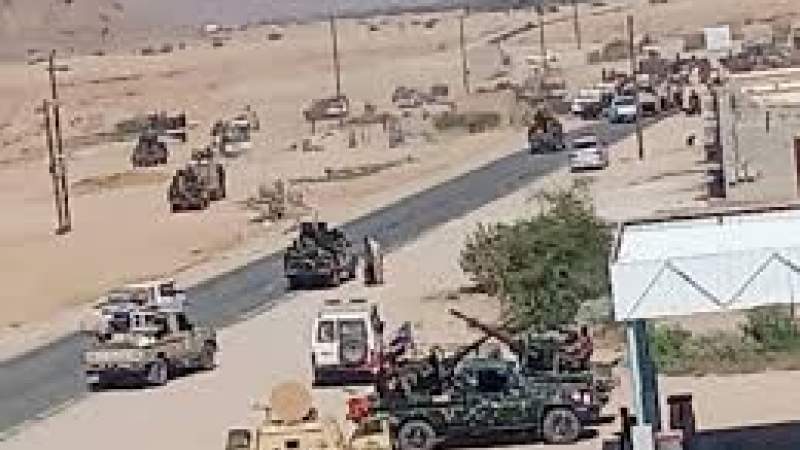
News - Yemen: Analysts have warned that the escalating developments in Hadhramawt and Mahrah reflect a coordinated international project—led by the United States and supported by Saudi Arabia, the UAE, and the Israeli enemy—aimed at reshaping Yemen’s geography, controlling its resources, and tightening influence over key maritime passages.
In separate interviews with Al-Masirah TV, Sheikh Ali Al-Kurdi, head of the Aden Sons Forum, and Arif Al-Amari, Secretary of the Southern Liberation Front, described the situation in eastern Yemen as an extension of historic colonial ambitions, now re-emerging in a modernized form through foreign-backed militias.
'A Modern Replica of British Colonialism': Al-Kurdi
Sheikh Ali Al-Kurdi said that developments in Hadhramawt and Al-Mahrah reflect “a clear continuation of the British colonial model,” arguing that the Saudi-UAE coalition represents “a modernized version of the old occupation,” now expanded to include Yemen and Sudan under US–British oversight.
Al-Kurdi explained that Riyadh and Abu Dhabi have pushed their rivalry in Yemen and Sudan to new levels, turning it into a process of mutual bargaining and territorial division—beginning with the dismantling of what was called the “legitimate government” and its military structure, and moving toward jointly reconfiguring political and military maps in the occupied provinces.
He said the Islah Party had received a decisive signal indicating the end of its role, following the STC’s advances in southern governorates and rising influence of UAE-aligned forces under Tariq Saleh. He added that foreign interference now includes direct Israeli involvement, pointing to past visits by Israeli officers to fronts in Al-Dhalea and Marib aimed at encouraging proxies to attack Sana’a in return for funding and military assistance.
Al-Kurdi warned that Saudi-UAE presence in Mahrah and Hadhramawt is tied to efforts to control maritime corridors and plunder Yemeni oil resources, including attempts to close supply routes used by resistance forces along the Arabian Sea and the western coast. He cited ongoing efforts to establish Israeli bases on Socotra, Abd Al-Kuri, and other islands.
He further described killings and abuses targeting northerners in Hadhramawt as “a dangerous message intended to create a south without Yemenis,” urging leaders in Marib, Taiz, and Hodeidah to return to the national fold before being targeted by the same militias.
Al-Amari: Saudi Arabia Is Reorganizing Its Cards at Yemen’s Expense
Arif Al-Amari said that what is unfolding in the eastern provinces is part of a broader US–Israeli plan to reshape Yemen’s coasts and deserts. He pointed to ongoing efforts to establish military bases and build airfields on Yemeni islands and strategic maritime passages with the aim of:
Protecting Israeli shipping
Providing logistical depth for foreign forces
Expanding into the deserts and valleys of Hadhramawt
Securing control over oil, water, and mineral wealth
Al-Amari noted that Yemen’s geopolitical position has historically made it a target for foreign powers, and that Saudi Arabia and the UAE now serve as implementing tools for a larger American-Zionist agenda. He said the rivalry between Islah and the STC merely reflects a deeper Saudi-UAE competition over dividing influence in the south.
He reported that UAE-aligned factions recently launched a broad campaign in Hadhramawt—including raids on Islah leaders’ homes, seizures of party headquarters, and pursuit of Riyadh-aligned officers—which he described as an attempt to “settle internal scores” under direct Emirati supervision.
Regarding Al-Mahrah, Al-Amari said the shift of tension toward the governorate reflects a Saudi plan to secure access to the Arabian Sea and international shipping routes after previous attempts to impose its agenda there had failed.
He also accused Saudi Arabia of escalating along the border in Sa'adah to provoke a new confrontation and evade the consequences of its political and military failures. However, he emphasized that the national leadership in Sana’a has responded with restraint and strategic patience, preventing the enemy from achieving its objectives.
A Regional Context Linked to Wider US Strategy
Both analysts connected the Yemeni theater to broader US operations in the region—in Palestine, Lebanon, Iraq, Iran, and Sudan—arguing that the underlying goal is safeguarding Israeli interests, influencing energy routes, and controlling land and maritime trade corridors.
They stressed that Yemen’s resistance has demonstrated resilience unmatched in the region, from the 1994 war to the ongoing confrontation with global naval forces during the Al-Aqsa Flood battle.
Al-Kurdi asserted that Yemeni forces now effectively encircle the Israeli entity in the Red Sea and prepare for a pivotal phase ahead, calling on Yemenis to mobilize fully—men, money, and supplies—saying, “The march toward Palestine is near, and divine victory is inevitable.”
Tensions in Hadhramawt and Mahrah have sharply escalated due to competing Saudi and UAE efforts to secure oil basins, border crossings, and maritime routes. Analysts say the rivalry—overseen by Washington and aligned with Israeli strategic objectives—seeks to fragment Yemen’s territorial cohesion and ensure long-term control over its strategic coastline and natural resources.
#Yemen #Occupation #Mahara #Hadramout about 5 days
-
12:36
Israeli enemy's glider drops bomb in Kfar Kila, Lebanese citizen survives: Al-Manar correspondent in south Lebanon
06:45
Hezbollah Secretary General Sheikh Naim Qassem meets Iran's Foreign Minister Abbas Araghchi
04:21
Gaza Health Ministry: Israeli aggression death toll rises to 71,409 martyrs and 171,304 wounded since the start of the aggression
04:21
Gaza Health Ministry: 439 martyrs and 1,223 wounded since the ceasefire on October 11th
04:21
Gaza Health Ministry: 14 martyrs and 17 wounded have arrived at Strip hospitals in the past 24 hours