Military Experts: Trump’s Naval and Missile Showmanship Driven by Arms Trade as US Navy Struggles After Red Sea Setback
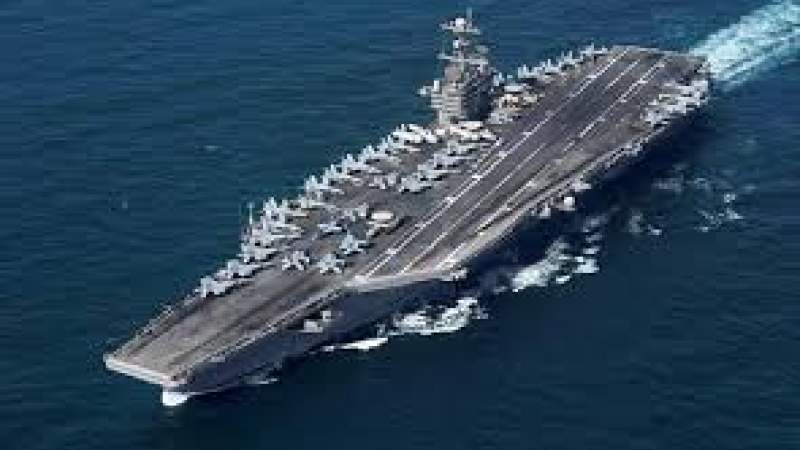
News – World: Military analysts say US President Donald Trump’s recent statements on producing hypersonic missiles and naming a new aircraft carrier after himself amount to political and commercial showmanship rather than genuine defensive planning, as the US Navy faces mounting operational challenges exposed during confrontations in the Red Sea.
Colonel Akram Kamal Sirwi, a military affairs expert, said Trump’s rhetoric reflects a personal and commercial mindset more than a security-oriented vision. He noted that Trump’s push for major weapons projects coincides with pressure on NATO allies to raise defense spending to five percent, a move that primarily benefits US arms manufacturers. According to Sirwi, global arms company profits exceeded $679 billion last year, with US firms taking roughly half, underscoring that commercial gain now precedes strategic defense considerations.
Sirwi said the US Navy suffered a serious setback in the Red Sea after failing to deter Yemen or prevent missile launches toward the Israeli enemy, despite support from France, Britain, and Germany. He added that Trump himself acknowledged Yemeni resilience during the confrontation, which further dented the image of what is often described as the world’s most powerful navy. The experience, he said, raised alarm within the Pentagon as traditional platforms—tanks, aircraft carriers, and frigates—proved vulnerable to low-cost, advanced Yemeni drone and hypersonic missile capabilities.
In a related assessment, Zakaria Al-Sharabi, head of the Information Center at the Moral Guidance Directorate, said the US Navy is confronting a battlefield reality for which its current tools are increasingly ill-suited. He described Trump’s remarks about the navy’s backwardness as an explicit political admission of these shortcomings.
Al-Sharabi explained that Washington’s challenge goes beyond upgrading aging vessels and extends to full fleet replacement, with proposed “Trump-class” ships intended to supplant Arleigh Burke–class destroyers. He said US operations in the Red Sea exposed deep structural flaws, noting that some US ships were forced to withdraw to Mediterranean ports to resupply, leaving operational gaps the overstretched fleet could not fill.
He added that of the 11 US aircraft carriers, only four are currently operational, while the rest are undergoing or awaiting maintenance. He pointed out that the USS Nimitz is set to retire this year, while its replacement, the USS John F. Kennedy, has been delayed by nearly two years due to industrial and logistical constraints.
Both analysts concluded that Trump’s public display of ships and missiles does not reflect actual US military readiness. Instead, they said, it serves to market the US arms industry and immortalize Trump’s name through high-profile projects, while masking the real operational and structural challenges confronting the US Navy in modern warfare.
The assessments come against the backdrop of the US Navy’s failure in the Red Sea following Yemeni operations linked to the Gaza war. Washington sought to secure maritime routes to protect the Israeli enemy. The campaign exposed cost-imbalance challenges, as US warships relied on high-value interceptors to counter low-cost drones and missiles.
At the same time, Washington has intensified pressure on NATO allies to raise defense spending, while domestic debates continue over delays, maintenance backlogs, and industrial bottlenecks affecting US naval readiness. Analysts say these factors have amplified political rhetoric around rearmament and modernization, even as real-world operations reveal growing structural strains within the US naval fleet.
#Yemen #US #Red Sea 25-12-25-
10:01
Qalibaf:Iranian nation will deal strong blow to those behind recent riots, fomenting unrest in country
10:00
Qalibaf: Security is a key element to economic growth, stability
09:59
Iran's Parliament Speaker Qalibaf: We accuse US, Israel of supporting recent riots, forming unrest across country
08:38
Somali defense minister: Israel is planning the forced displacement of Palestinians to “Somaliland”
08:38
Palestinian sources: Israeli enemy launches airstrikes on areas of its forces’ deployment east of Rafah, Khan Younis, and Al-Bureij camp in central Gaza