Yemen Warns Israeli Enemy’s Moves in Horn of Africa Threaten Arab Security and Maritime Stability
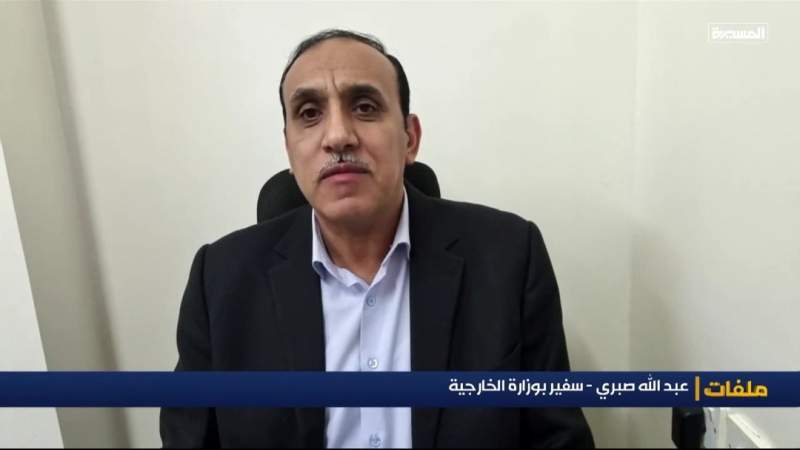
News - Middle East: Yemen has warned that recent moves by the Israeli enemy, including recognition of the so-called “Somaliland,” are part of an integrated Zionist project to dominate strategic maritime passages, militarize the Red Sea, and dismantle Arab regional influence.
Abdullah Ali Sabri, Yemen’s ambassador at the Ministry of Foreign Affairs, said in a televised interview that the Zionist entity has historically relied on expansion, aggression, and division, fueling sectarian, regional, and separatist tendencies to weaken neighboring states.
He linked the timing of recognition of “Somaliland” to the ongoing aggression on Gaza, attempts to revive “New Middle East” and “Greater Israel” projects, and the rising strategic role of Yemen’s front, which has shifted from secondary to key in regional calculations.
Sabri emphasized that Yemen’s maritime operations—leading to the closure of occupation ports and disruption of Israeli enemy supply chains—have exposed the vulnerability of its Red Sea presence, prompting the Israeli enemy to pursue formal relations with “Somaliland” and potentially establish military bases. He warned that this could militarize the Red Sea, escalate regional tensions, and threaten international navigation.
Zakaria Al‑Sharabi, head of the Information Center at the Moral Guidance Directorate, stated that the Israeli enemy’s expansion in Berbera, Puntland, Yemen’s Mayun and Socotra islands, and the Indian Ocean aligns with the decades-old “New Middle East” plan to transform the entity from a local occupier into a regional hegemon. He said the project is facilitated by certain Arab regimes, chiefly the UAE, and poses direct threats to Arab national security, vital trade routes, and the Suez Canal.
Al‑Sharabi traced the Zionist entity’s strategic interest in the Red Sea to 1948, noting repeated efforts to secure Bab al‑Mandab and surrounding areas, and cited statements by Benjamin Netanyahu highlighting the strait’s centrality to the entity’s security doctrine.
He stressed that efforts to control trade, energy routes, and undersea communication cables are ongoing, but Yemen’s operations during the Promised Conquest and Sacred Jihad battle have disrupted these plans and impacted Israeli enemy trade.
Both Sabri and Al‑Sharabi called for a unified and responsible Arab response, warning that weak or delayed positions would allow the Israeli enemy to expand its presence, while stronger regional coordination could safeguard Arab sovereignty and maritime security.
The Red Sea and Horn of Africa are key strategic corridors for global trade, energy, and military influence. Control of chokepoints like Bab al‑Mandab allows any power to project dominance over the Arab region and international shipping.
Recent Israeli enemy moves in “Somaliland,” Yemen’s islands, and ports like Berbera and Puntland aim to militarize the Red Sea, encircle the Arab heartland, and challenge regional security. Yemen’s growing maritime role has turned the Red Sea into a frontline for Arab sovereignty, deterrence, and global navigation.
#Somalia #Israeli Aggression 25-12-29-
10:04
Lebanese Health Ministry: One person was martyred as a result of an airstrike by the Israeli enemy targeting a vehicle in the city of Bint Jbeil, southern Lebanon
10:04
Almasirah correspondent in Sa’adah: A second civilian was injured by mortar shrapnel fired by the Saudi enemy army at the border district of Shada
10:03
Almasirah correspondent in Sa’adah: A second civilian was injured by mortar shrapnel fired by the Saudi enemy army at the border district of Shada
09:48
Almasirah correspondent in Sa’adah: A civilian was wounded after Saudi enemy artillery shelling targeted residential villages in the border district of Shada
09:37
Palestinian sources: Artillery fire by the Israeli enemy targets the northeastern area of Al-Bureij refugee camp in the central Gaza Strip