UAE Withdrawal From Yemen Largely Symbolic as Influence Persists Through Local Proxies, Analysts Say
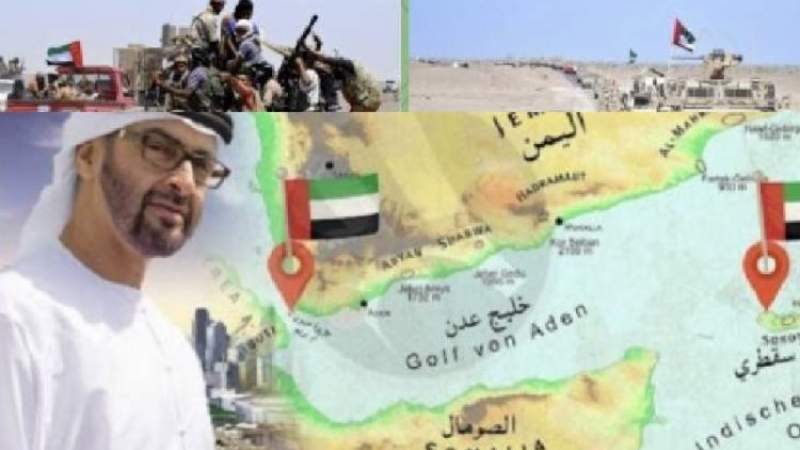
News – Yemen: Political and economic analysts say the United Arab Emirates’ announced military withdrawal from parts of Yemen is largely cosmetic, arguing that Abu Dhabi continues to exert influence through local tools, external agendas, and military and intelligence infrastructure serving broader US–Zionist objectives.
Political activist Al-Yousfi stated that the UAE’s real presence remains intact via forces and entities it cultivated and empowered over recent years, stressing that Emirati and Zionist influence persists through military bases in strategic locations, most notably Mayyun Island, as well as camps established under direct Emirati supervision with international cover led by Britain.
He noted that Abu Dhabi operates with extensive intelligence archives on Yemen inherited from the British side, implementing them on the ground in ways that advance domination and control projects. According to Al-Yousfi, developments in southern provinces confirm that Emirati goals were never linked to counterterrorism, but instead contributed to reproducing and feeding instability under misleading labels, in a pattern similar to Libya and Syria.
Al-Yousfi added that these policies align with an old British plan to fragment the region into fragile entities, a project extending from Yemen to Somalia, Sudan, and Libya, now revived under a renewed colonial vision. He also pointed to growing US involvement aimed at managing tensions among regional tools to serve the American–Zionist project, amid reports of Saudi Arabia moving toward joining the so-called “Abraham Alliance,” following the UAE’s path of normalization. He cited expanding US corporate dominance in oil sectors in Hadramout and Shabwah as evidence of rising American influence.
In a related context, economic expert Rashid Al-Haddad said Emirati moves in the separatist region of so-called “Somaliland” are inseparable from serving the Zionist project and Israeli enemy ambitions to control Bab al-Mandab. He explained that Abu Dhabi’s deep engagement with the unrecognized separatist authorities amounts to implicit recognition that undermines Somalia’s sovereignty.
Al-Haddad highlighted the 2016 agreement granting DP World control over Berbera Port, noting that its limited financial value contrasts sharply with the port’s strategic location at the southern entrance of Bab al-Mandab and along a coastline exceeding 700 kilometers on the Red Sea and Gulf of Aden. He said subsequent developments exposed the falsity of investment claims, as the port was militarized in 2017 and effectively converted into a military base.
According to Al-Haddad, the UAE lacks both the capacity and strategic incentive to establish such military influence independently, asserting that its role is limited to providing logistical and security services—possibly without cost—for the benefit of the Zionist entity, under Western, particularly British, direction.
Meanwhile, Lebanese political analyst Mohammed Hezima said the Israeli enemy’s central objective is to impose regional hegemony under an expansionist strategy tied to the “Greater Israel” project and the US vision for reshaping the Middle East. He explained that pushing for recognition of “Somaliland” forms part of efforts to reach Bab al-Mandab and the Indian Ocean, especially after the Zionist entity faced mounting strategic pressure following the Al-Aqsa Flood battle.
Hezima stressed that Yemen’s role, led by Ansarullah, has evolved from support to direct influence in the balance of conflict, particularly through maritime pressure that exposed Israeli and US vulnerabilities. He added that the Israeli enemy is now seeking alternatives by expanding intelligence presence in the Horn of Africa, establishing early-warning systems, and laying the groundwork for military encirclement, while simultaneously working to exhaust key Arab states politically, economically, and militarily.
The renewed focus on Yemen and the Horn of Africa comes amid intensified regional competition over strategic waterways, particularly Bab al-Mandab and the Red Sea, which are vital to global trade and energy flows. Analysts say Emirati, Saudi, and Western-backed moves, alongside Israeli enemy ambitions, are part of a broader effort to reshape the region’s geopolitical map, deepen normalization, and counter emerging resistance dynamics following major shifts triggered by the war on Gaza and Yemen’s expanding role in regional deterrence.
#Yemen #Israel #UAE #Occupied Southern Governorates about 15 Hours-
11:18
Palestinian sources: heavy tank fire by the Israeli enemy north of Al-Bureij Camp and east of Wadi Gaza Bridge in central Gaza Strip
10:55
Mohammed Abdulsalam: There is an opportunity for those who act wisely to address various issues caused by Saudi-American aggression against Yemen
10:55
Mohammed Abdulsalam: The bet on the continuation of aggression and blockade has failed and will only bring more losses
10:54
Mohammed Abdulsalam: The end of the coalition, leaving Saudi Arabia alone at the forefront, was a major shift last year
10:54
Mohammed Abdulsalam: The blockade on Yemeni airports and ports amounts to collective punishment of the Yemeni people