Power Struggle Intensifies in Yemen’s Occupied Provinces as UAE Distances Itself from STC
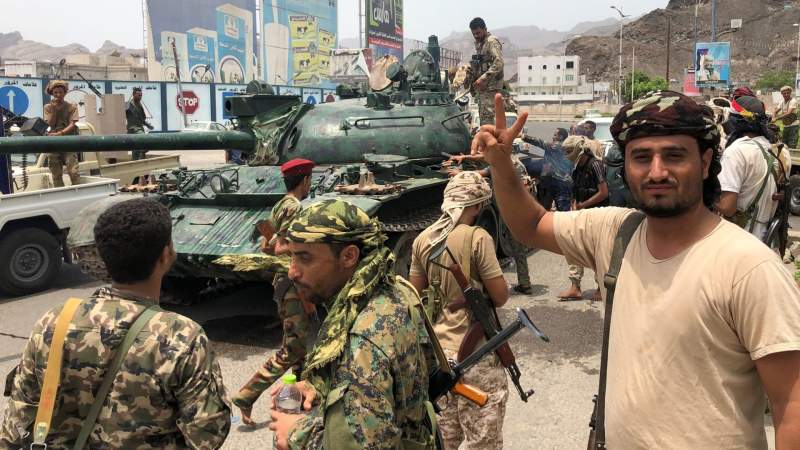
News – Yemen: Developments are accelerating in Yemen’s occupied eastern and southern provinces amid an increasingly visible rift between Saudi Arabia and the United Arab Emirates, placing the Southern Transitional Council (STC) and its leader Aidrous Al-Zubaidi under mounting pressure.
Local political sources say STC-aligned forces have withdrawn from parts of Hadramout and Al-Mahrah, while Riyadh has tightened its grip over key areas, reflecting a shift in the balance of influence between the two regional powers. The dispute, previously managed behind closed doors, has moved into the open, with Saudi Arabia asserting itself as the dominant decision-maker on the ground.
Analysts describe the current phase as part of an intensified Saudi–Emirati rivalry over control of resource-rich eastern provinces and strategic ports and crossings. According to observers, Abu Dhabi has opted to de-escalate and pull back some of its local allies, leaving several affiliated figures exposed to Saudi pressure, including arrests, political marginalization, and military action against those seen as defying Riyadh’s authority.
In recent days, prominent figures previously aligned with the UAE, including Tariq Saleh and Abu Zara’a Al-Muharrami, have signaled a pivot toward Saudi Arabia. The STC leadership has also issued statements seeking to ease tensions with Riyadh, amid growing indications that its political room for maneuver is narrowing.
Saudi media commentary has further highlighted the shift. Abdullah Al-Hatila, deputy editor-in-chief of the Saudi daily Okaz and a figure close to the royal court, published remarks suggesting possible international legal action against Al-Zubaidi over events in Hadramout and Al-Mahrah. Analysts interpret this as part of a broader Saudi strategy to use legal and political pressure to discipline local actors perceived as exceeding agreed boundaries in areas of strategic and economic importance.
Tensions have also exposed the fragility of the Saudi-backed Presidential Leadership Council, as internal disputes and competing loyalties among its members become increasingly public. The escalation underscores deep divisions among Saudi- and Emirati-backed factions, particularly over airports, coastal zones, and oil-producing regions.
Despite the rivalry, residents of Aden and other southern and eastern provinces continue to bear the brunt of the instability, facing deteriorating security and living conditions amid competing regional agendas.
Since the start of the aggression on Yemen, Saudi Arabia and the UAE have supported different local forces, often pursuing overlapping but divergent interests. While both countries formally cooperated under a single military coalition, competition over ports, energy resources, and strategic waterways has repeatedly generated friction. The latest developments reflect a new phase in that rivalry, with shifting alliances and growing uncertainty over the future political and security arrangements in Yemen’s occupied provinces.
#Yemen #Hadramout #Occupied Southern Governorates about week-
10:01
Qalibaf:Iranian nation will deal strong blow to those behind recent riots, fomenting unrest in country
10:00
Qalibaf: Security is a key element to economic growth, stability
09:59
Iran's Parliament Speaker Qalibaf: We accuse US, Israel of supporting recent riots, forming unrest across country
08:38
Somali defense minister: Israel is planning the forced displacement of Palestinians to “Somaliland”
08:38
Palestinian sources: Israeli enemy launches airstrikes on areas of its forces’ deployment east of Rafah, Khan Younis, and Al-Bureij camp in central Gaza